Ines Simmons · 2 September 2026
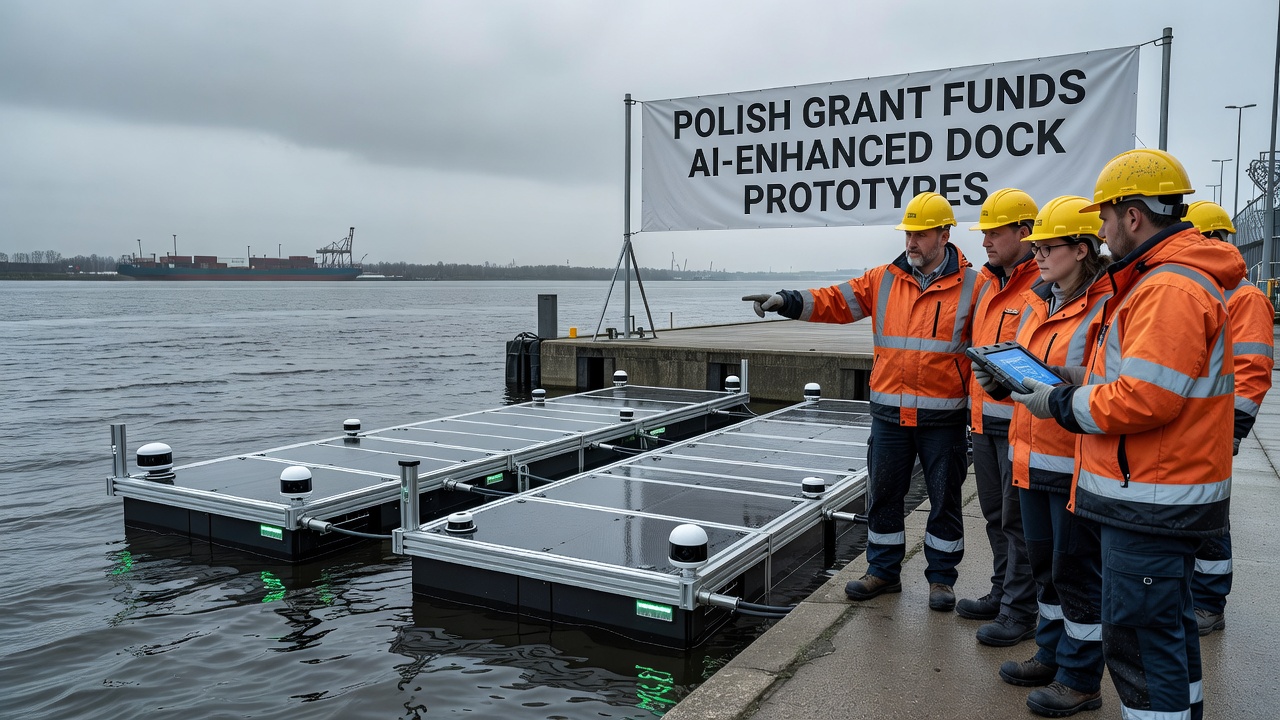
The Polish National Centre for Research and Development has awarded a significant grant to Clever Dock Research to advance prototypes integrating artificial intelligence into maritime docking systems. The funding supports a three-year initiative focused on enhancing safety, efficiency, and automation in port operations across the Baltic region.
Project Scope and Technical Focus
Researchers will develop sensor arrays combined with machine learning algorithms to enable real-time vessel positioning and predictive collision avoidance. The prototypes incorporate computer vision for dynamic environmental analysis, allowing docks to adapt to changing weather and tidal conditions without human intervention. Initial testing phases will occur at controlled facilities near Gdańsk, with data collection emphasizing energy consumption reduction and operational throughput improvements.
Team members include specialists in robotics, naval architecture, and data science. The grant covers hardware acquisition for high-resolution LiDAR units and edge computing modules that process information locally to minimize latency. Collaboration with Polish maritime universities ensures access to simulation environments for validating AI models before physical deployment.
Key milestones include prototype iteration every six months, followed by peer-reviewed publications on system performance metrics. Emphasis remains on scalable designs suitable for both commercial cargo terminals and smaller recreational harbors.
Expected Outcomes and Industry Impact
Successful implementation could lower accident rates in docking maneuvers by up to 40 percent according to preliminary modeling. Broader adoption may contribute to reduced fuel use through optimized approach paths and decreased idle times at berths. The project aligns with European Union directives on smart infrastructure and sustainable transport.
Results will be shared through academic channels and industry workshops, fostering knowledge transfer to other research institutions. Long-term goals involve integrating the technology with national port management platforms to support coordinated logistics across multiple sites.
Funding totals approximately 4.2 million euros, allocated primarily to personnel, equipment, and field trials. Project leads anticipate first operational prototype demonstrations by the end of the second year, paving the way for potential commercialization partnerships.